
How to Search Lycoming County Court Records
The main online starting point is the Pennsylvania Unified Judicial System Case Search. It provides public docket sheets for appellate courts, Courts of Common Pleas, and Magisterial District Courts. For Lycoming County Court records, use the county filter whenever possible. Common Pleas dockets are used for felony criminal cases, major civil cases, divorce, custody, juvenile matters where public, and Orphans' Court-related entries. Magisterial District Court dockets are used for most traffic citations, landlord-tenant filings, preliminary criminal proceedings, non-traffic summary cases, and smaller civil claims.
The county's official government portal is the local starting point for office routing. The Lycoming County official homepage links to the courts, sheriff, prison, row officers, and public records channels that may be needed after a docket is found.

That county homepage matters because not every court task is solved in one database. Certified copies, older paper files, marriage records, estate files, jail questions, and sheriff warrant checks all route to different offices.
- Open the UJS Case Search and choose the docket sheet search that matches the record type.
- Search by docket number if known, or by participant name with Lycoming selected as the county.
- Choose Common Pleas for felony, civil, family, divorce, and Orphans' Court matters, or Magisterial District Court for traffic, preliminary criminal, landlord-tenant, and small civil cases.
- Review the caption, court, filing date, case status, parties, events, charges, dispositions, sentence, judgment, or costs sections.
- Contact the Prothonotary or Clerk of Courts when a certified copy, sealed-record review, or document not available online is needed.
| Search Field | How It Helps | Lycoming County Tip |
|---|---|---|
| Participant name | Finds cases when no docket number is known. | Use exact spelling and narrow results to Lycoming. |
| Docket number | Finds the most precise record. | Common Pleas criminal dockets often use a CP-41-CR style number. |
| Court type | Separates Common Pleas from Magisterial District Court. | Traffic and preliminary criminal records may be in an MDJ docket. |
| Case category | Limits results by criminal, civil, family, traffic, or other case type. | Use it after a broad name search returns too many records. |
| Date range | Focuses filing or event searches. | Helpful for common names and older docket activity. |
Lycoming County Court System
Lycoming County is part of Pennsylvania's 29th Judicial District. The county-level trial court is the Lycoming County Court of Common Pleas. That court hears felony criminal cases after preliminary proceedings, major civil actions, family matters, divorce, custody, juvenile matters, dependency, equity, protection-from-abuse proceedings, Orphans' Court matters, and appeals from Magisterial District Courts. The lower courts are Magisterial District Courts. They are often the first court level for traffic tickets, landlord-tenant complaints, small civil claims, summary offenses, preliminary arraignments, and preliminary hearings.
The statewide courts overview confirms that Pennsylvania Courts of Common Pleas are the county-level trial courts.
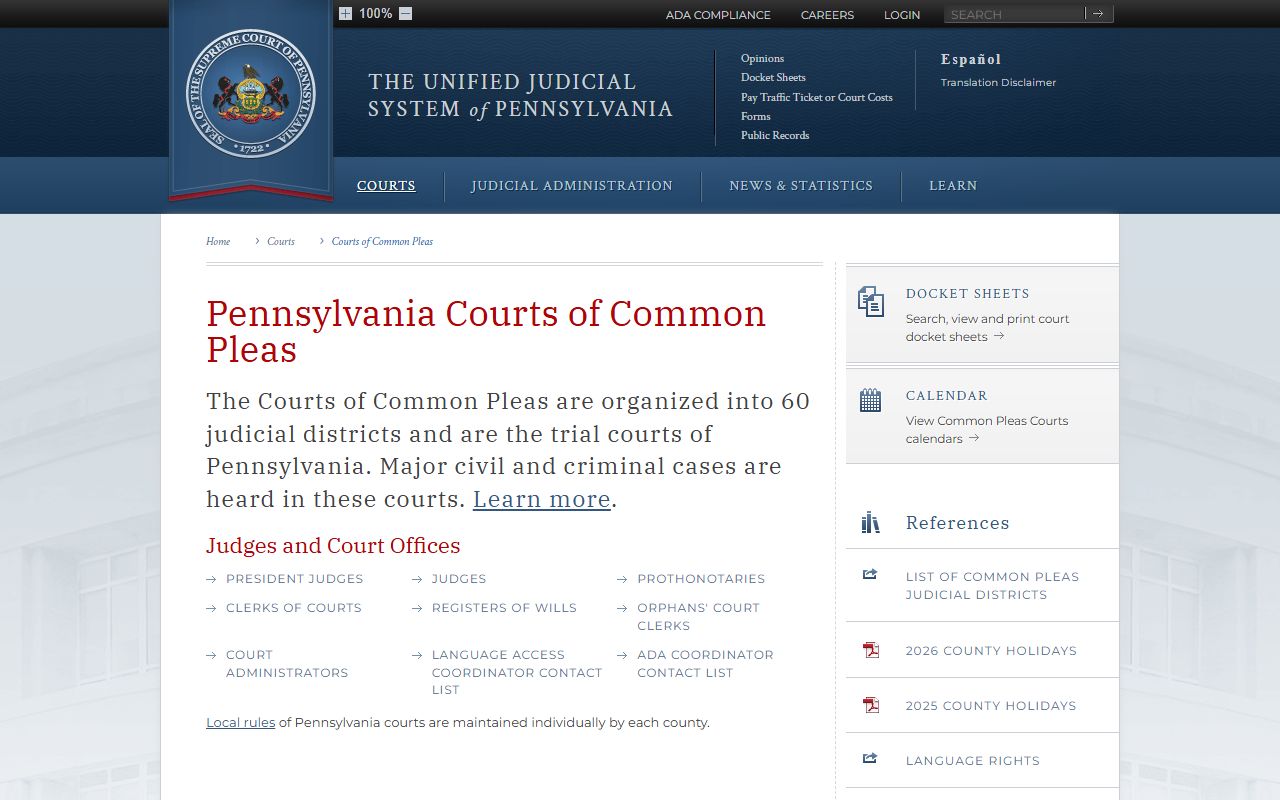
That state framework explains why the Lycoming County trial-court page is named for the Court of Common Pleas rather than a district court.
The county courts and legal landing page gives local context for the 29th Judicial District and links users toward the Common Pleas court, Magisterial District Judges, public defender, prison, and other court-related offices.
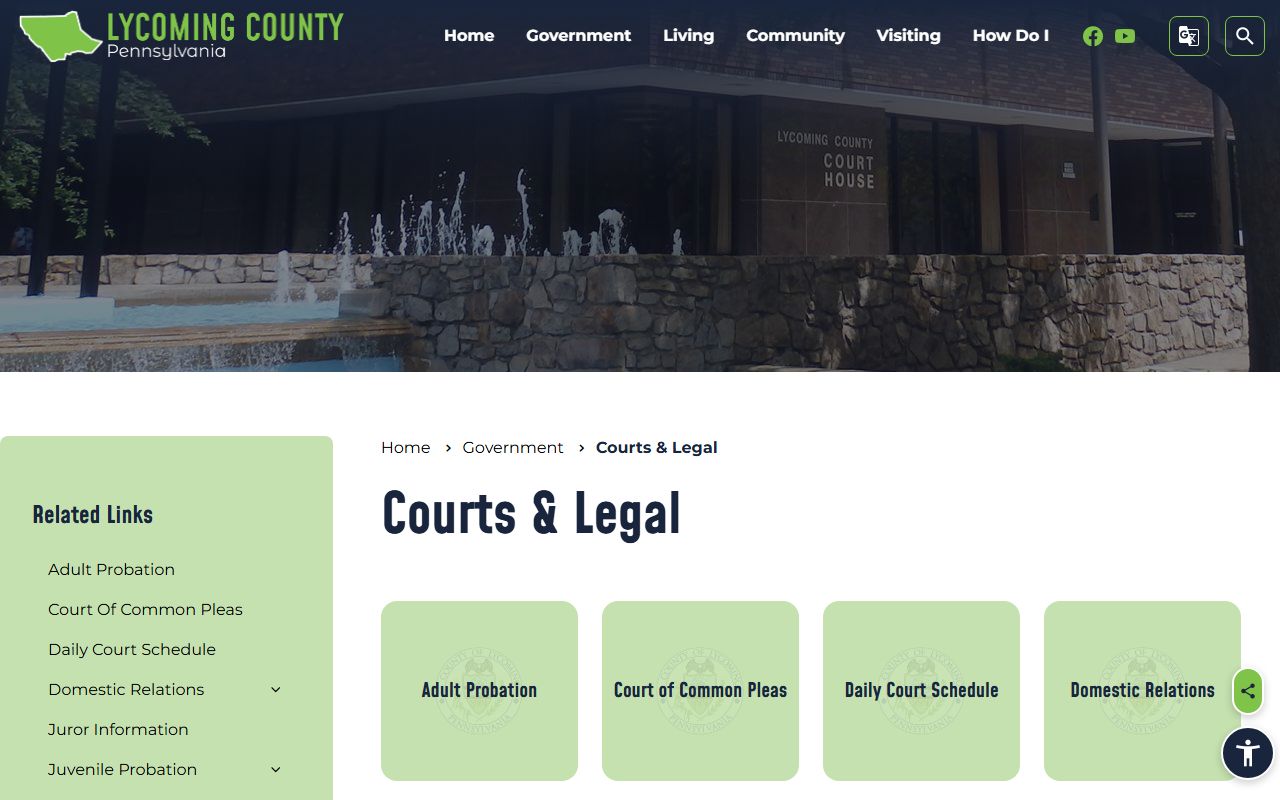
Use that court landing page to confirm which local office is tied to the case. A felony charge, divorce decree, traffic citation, estate petition, and inmate-status question can all involve the court system, but they do not share the same clerk or record channel.
Case flow: Magisterial District Court › Court of Common Pleas › Superior Court or Commonwealth Court › Supreme Court of Pennsylvania.
| Court or Office | Role | Common Record Types |
|---|---|---|
| Court of Common Pleas | Primary county trial court | Felony, civil, family, divorce, juvenile, Orphans' Court, appeals from MDJs |
| Magisterial District Courts | Lower trial-level courts | Traffic, landlord-tenant, preliminary criminal, small civil, summary offenses |
| Prothonotary | Civil clerk for Common Pleas | Civil filings, judgments, liens, divorce files, family civil records |
| Clerk of Courts | Criminal clerk for Common Pleas | Criminal dockets, criminal filings, costs, fines, certified criminal copies |
| Register and Recorder | Marriage, Register of Wills, and Orphans' Court functions | Marriage licenses, estates, wills, guardianship-related records |
Lycoming County Court of Common Pleas
The Court of Common Pleas is the court most people mean when they ask for the main Lycoming County Court. It sits at the county courthouse in Williamsport and handles the broad trial-court docket. A criminal case may begin with police and a Magisterial District Judge, but a felony case that is held for court moves to Common Pleas. A divorce, custody filing, civil complaint, judgment, or lien generally belongs to the civil side, which means the Prothonotary is the office to contact for copies and filing questions.
The official Court of Common Pleas page identifies the local trial court structure and is the source to use before a courthouse trip.
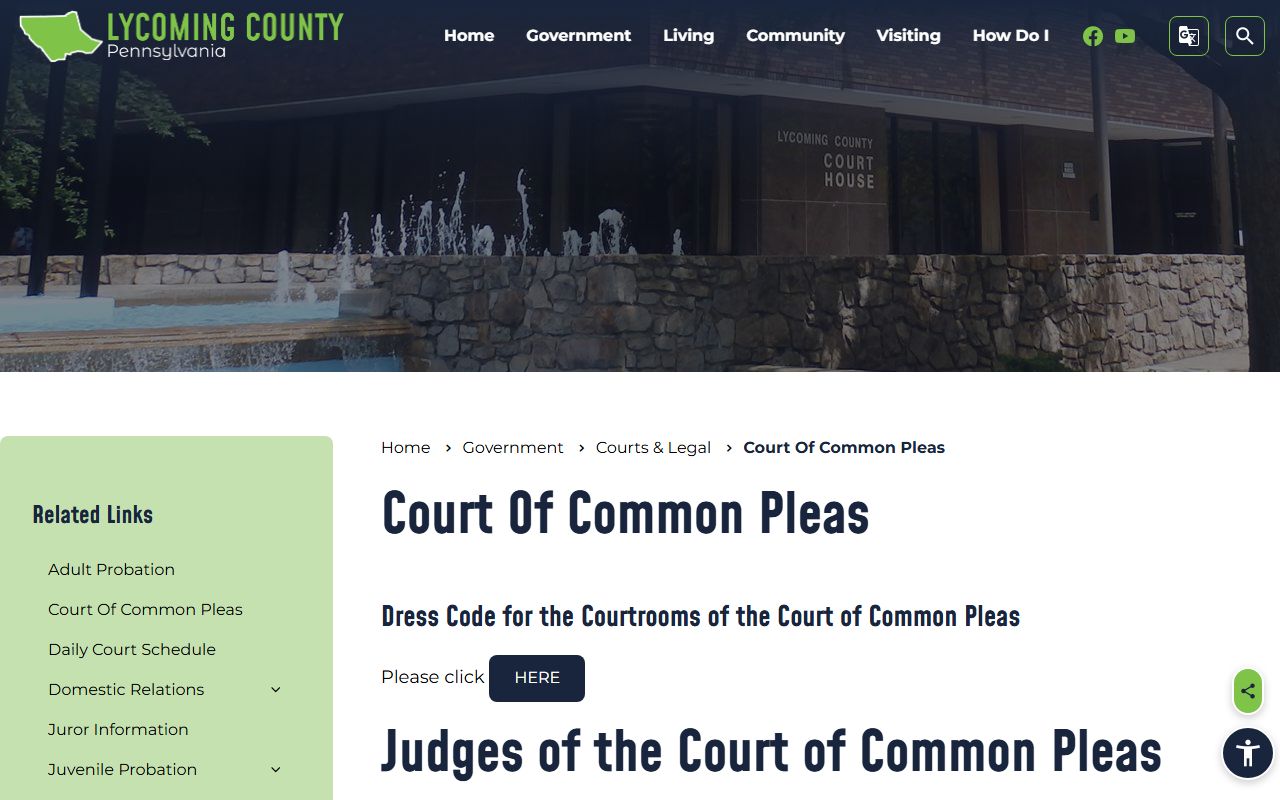
That page helps separate Common Pleas work from Magisterial District Court work. The distinction is important because a traffic citation or preliminary hearing may never appear as a full Common Pleas record unless the case moves forward.
Types of Lycoming County Court Records
Lycoming County court records include more than one file type. Civil records may show complaints, judgments, liens, motions, orders, service entries, and appeals. Criminal court records may show charges, arraignment events, bail, pleas, motions, verdicts, sentencing orders, costs, restitution, and appeals. Family and divorce records can show captions, filings, orders, and decrees, but custody evaluations, financial papers, child identifiers, and abuse-related details may be restricted.
Traffic cases usually begin in Magisterial District Court and may also be payable through PAePay if eligible. Orphans' Court and Register of Wills records cover wills, estates, petitions for letters, inventories, guardianships, accountings, fiduciary bonds, and related court orders. Juvenile and adoption records are not ordinary public search records.
- Civil records: Common Pleas civil filings, judgments, liens, motions, and orders held by the Prothonotary.
- Criminal records: Common Pleas criminal filings, charges, pleas, dispositions, and sentencing records held by the Clerk of Courts.
- Traffic records: Magisterial District Court citations, pleas, fines, costs, and dispositions, with driver history kept separately by PennDOT.
- Marriage and divorce records: Marriage licenses are with the Register and Recorder, while divorce files are Common Pleas civil/family records.
- Orphans' Court records: Estate, will, guardianship, and fiduciary matters tied to the Register of Wills and Orphans' Court channels.
What Lycoming County Court Records Show
A public docket is a record of what happened in a case, not always a scanned packet of every document. It can identify the court, county, docket number, case caption, filing date, status, judge or issuing authority, parties, attorney names, events, charges, civil cause of action, disposition, sentence, judgment, costs, restitution, and appeal entries. Some records show redacted or limited fields because Pennsylvania court rules restrict personal identifiers and protected case categories.
| Field | What It Shows |
|---|---|
| Docket number | The court's tracking number, such as a Common Pleas or Magisterial District Court identifier. |
| Caption | The official case title, such as plaintiff and defendant or Commonwealth and defendant. |
| Filing date and status | When the case opened and whether it is active, closed, disposed, appealed, sealed, or inactive. |
| Events | Entries for filings, hearings, orders, continuances, pleas, judgments, appeals, or sentencing. |
| Charges or cause | Criminal statute counts, traffic violations, civil complaint type, or probate petition type. |
| Financials | Costs, fines, restitution, bail, judgment amounts, or payment status when public. |
Public Access Rules for Lycoming County Court Records
Pennsylvania separates court-record access from ordinary agency records. The Right-to-Know Law applies to many state and local agency records, but judicial case files are governed by court policy, rules, and statutes. For Lycoming County court records, start with the UJS public docket search, then use the Prothonotary, Clerk of Courts, Magisterial District Court, Register and Recorder, or sheriff channel that matches the record.
The statewide UJS portal is the most useful public case search interface for Lycoming County dockets.
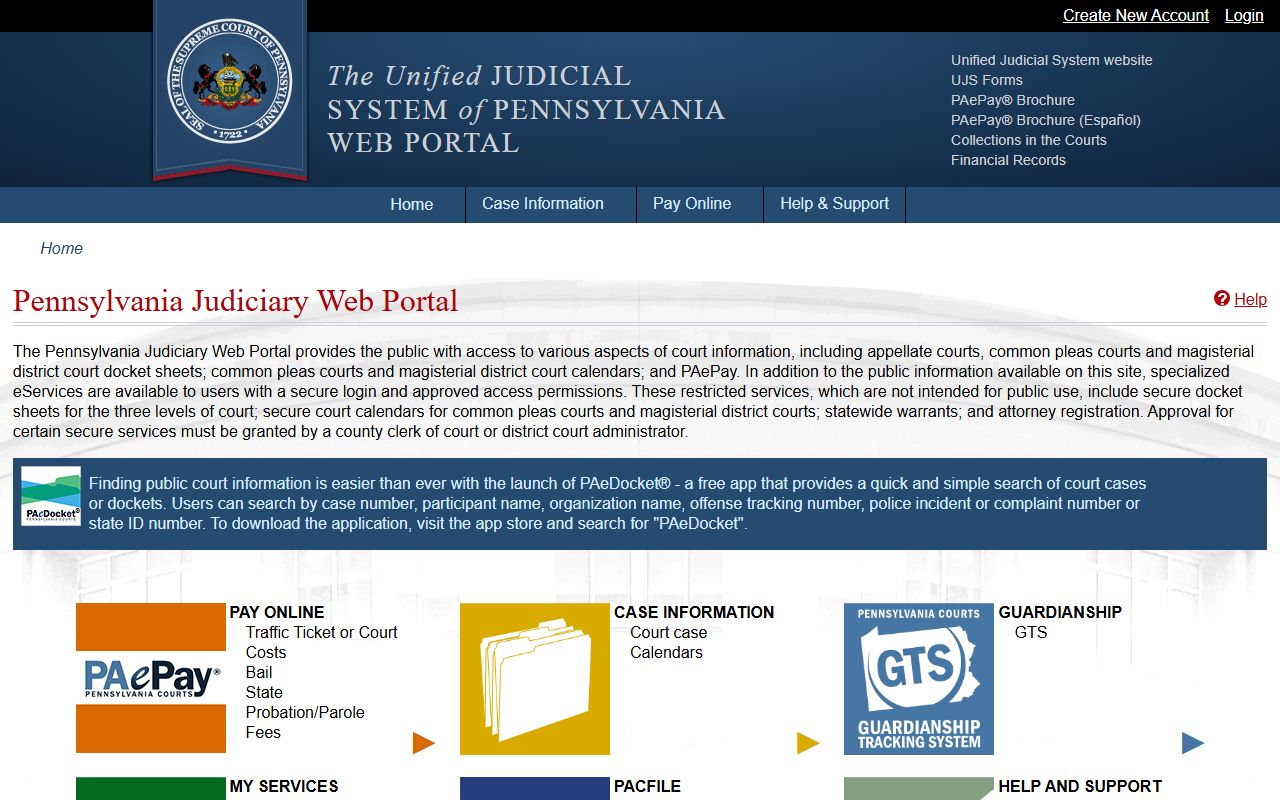
Its public docket sheets are broad, but they do not replace certified copies. The originating office remains the source for official copies, older records, and records that need clerk review.
Key access rules:
Pennsylvania Right-to-Know Law governs many agency records, but it is not a general substitute for court-file access.
Pennsylvania judiciary public-records guidance explains how court-system public records are handled at the state level.
18 Pa.C.S. Section 9122 is the core expungement statute for eligible criminal-history and court-record relief.
42 Pa.C.S. Section 6307 restricts juvenile court records, so those files are not ordinary public docket material.
The UJS case-search interface is the direct public docket search named in the research file.
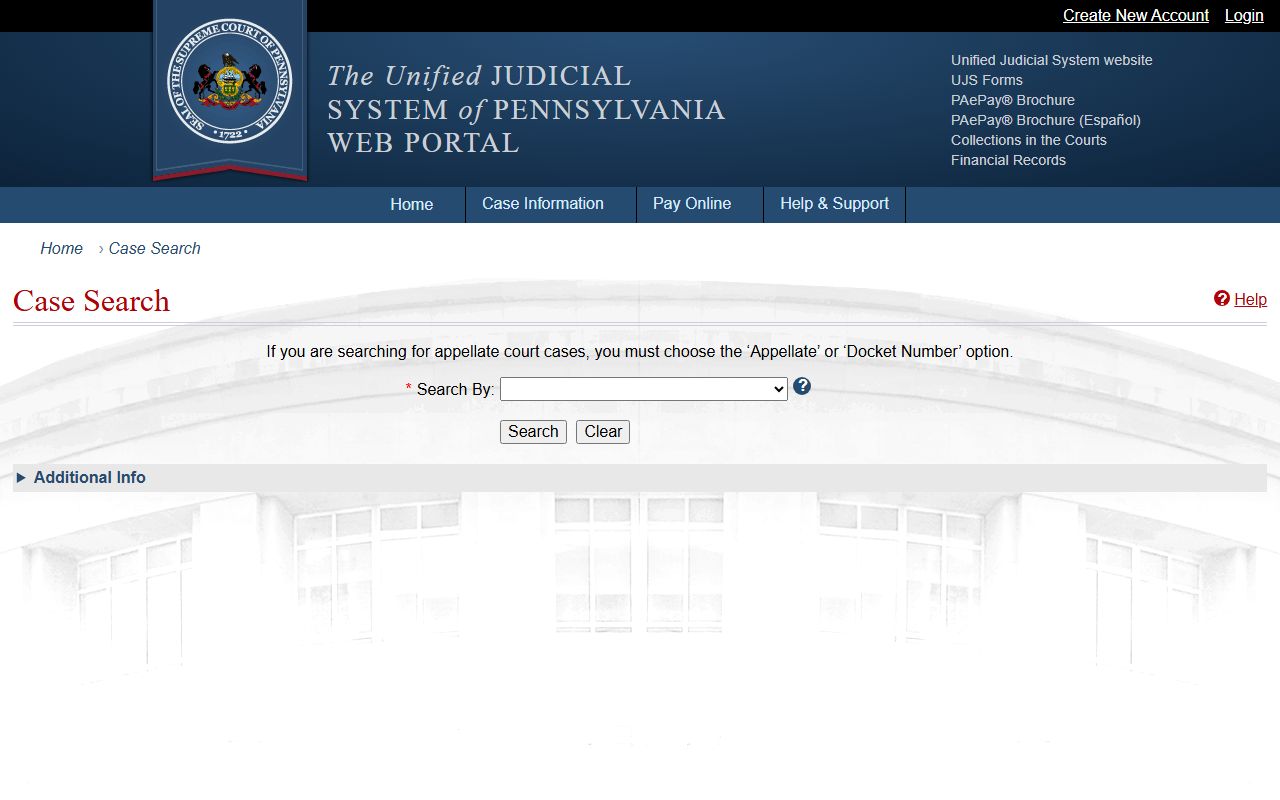
Use it for the docket first, then contact the correct Lycoming County office if the docket points to a certified-copy need, a sealed matter, or a document that is not downloadable.
For non-judicial county agency records, the Pennsylvania Office of Open Records provides statewide Right-to-Know Law guidance.
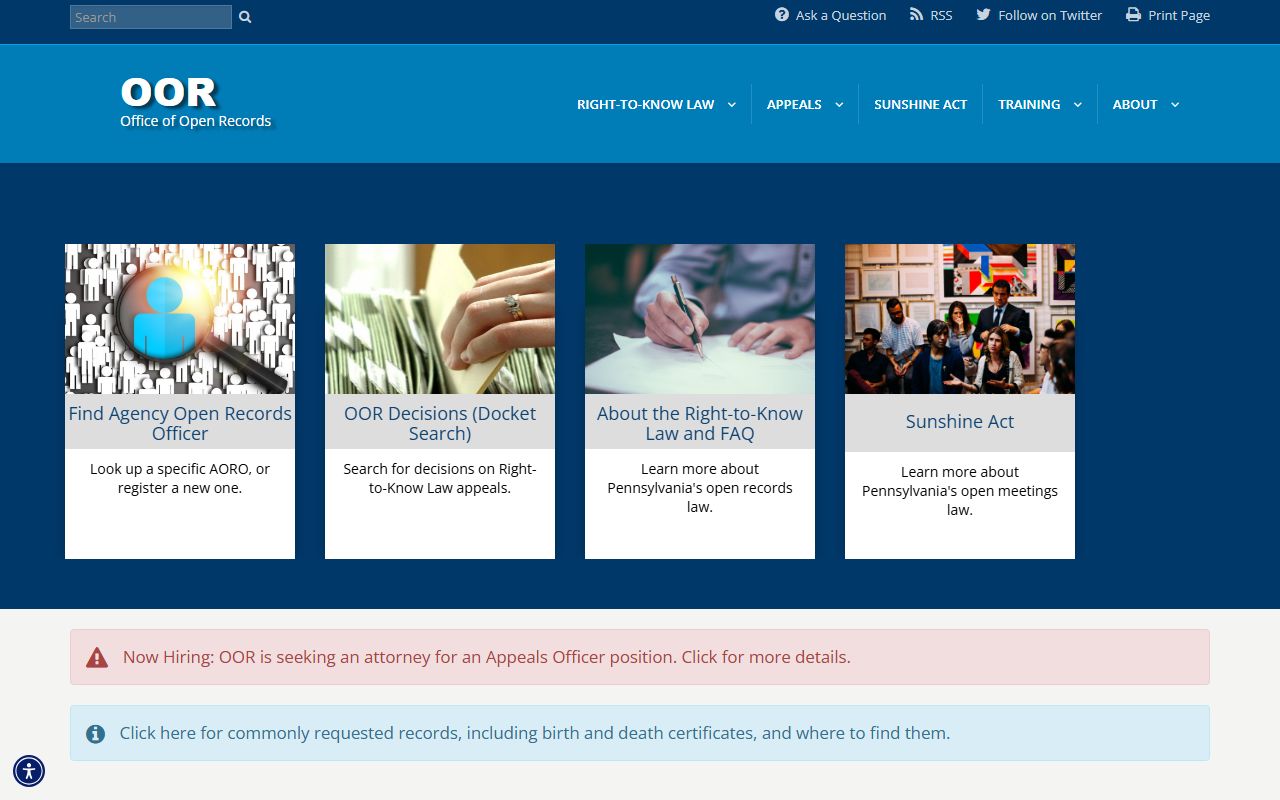
That channel helps with county administrative records, but it does not override sealed court files or the judiciary's separate case-record access rules.
Restricted Lycoming County Court Records
Public access has limits. Juvenile delinquency and dependency records are restricted. Adoption files are confidential. Mental-health matters have privacy protections. Sealed or expunged criminal records are removed from ordinary public view after a court order. Family-sensitive filings may hide addresses, financial account data, medical details, custody evaluation content, and child information. A docket may also show less detail online than a clerk can review at the counter.
Expungement and sealing are court-ordered processes. A person seeking relief usually needs the docket number, disposition, sentence-completion information, and any arrest or charge identifiers. The district attorney may receive notice and may object. No online search result should be treated as proof that a case can be removed or sealed.
Note: If a record is sealed or restricted, a general public-records request will not force it into public view.
Lycoming County Sheriff and Jail
The sheriff is tied to warrants, civil process, courthouse security, transport, and other law-enforcement functions. The prison is a separate county facility at 277 West Third Street in Williamsport. Custody status and court records are different systems. A jail or VINE search can show custody status, while UJS docket records show charges, bail, sentence, and court events when public. Active warrants are published through a sheriff CRIMEWATCH page, and the Warrants Division warns people not to attempt to apprehend a fugitive.
The county's state judiciary public-records guidance is a useful companion source for access limits and court-record routing.
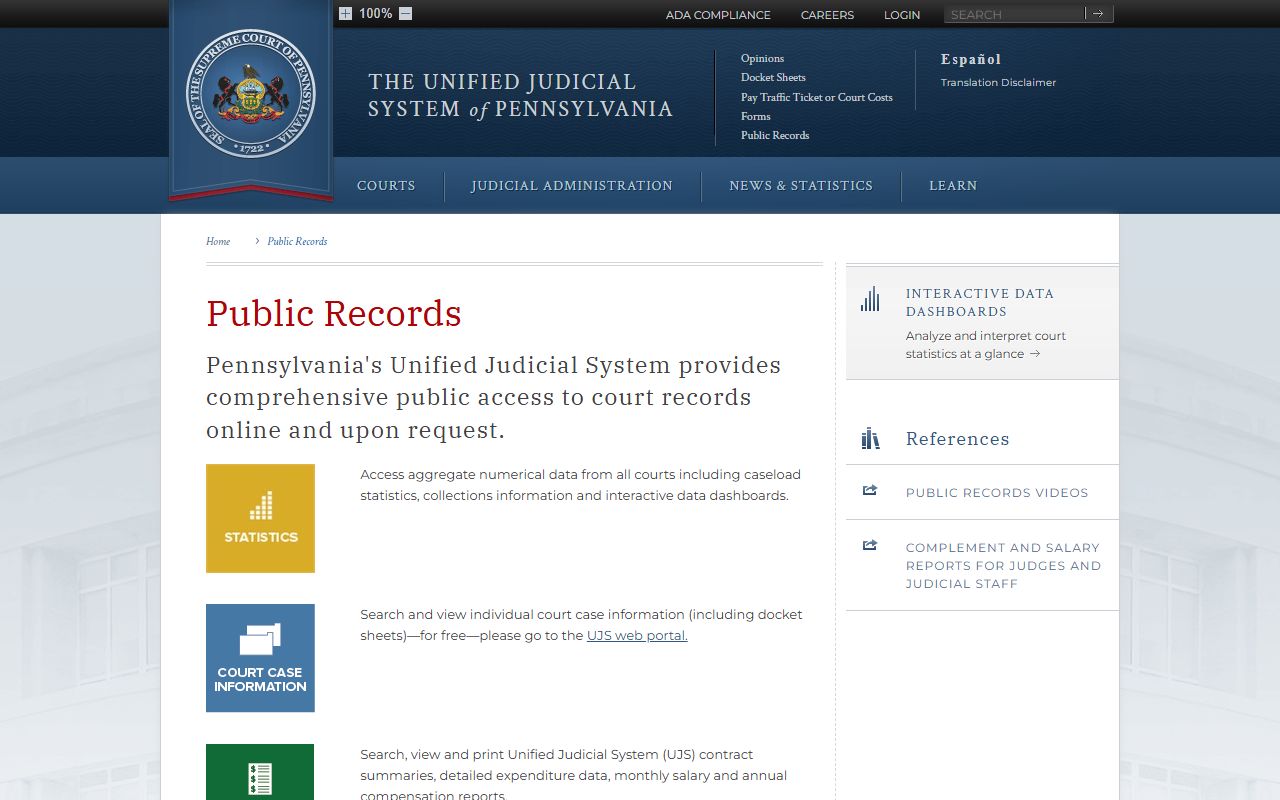
That distinction matters when a reader has a custody or warrant question. Court dockets, jail custody tools, sheriff warrant pages, and county records requests answer related but separate questions.
Marriage Divorce and Orphans' Court Records
Marriage licenses are handled by the Lycoming County Register and Recorder, not by the Prothonotary. Applicants must follow the county marriage clerk's appointment procedure, bring required identification, and meet Pennsylvania waiting-period and validity rules. Certified marriage copies are ordered from the Register and Recorder. Divorce records are different. They are Common Pleas civil or family records, so a divorce docket search starts with UJS and certified decree access routes through the Prothonotary.
Probate in Lycoming County is tied to the Orphans' Court and Register of Wills functions. Estate records may include wills, petitions for letters, inventories, accountings, guardian filings, fiduciary bonds, inheritance-tax materials, and court orders. Adoption records are confidential and should not be searched like ordinary estate files. Small-estate rules under Pennsylvania law can affect whether a full estate proceeding is needed.
- Testator
- The person who made a will.
- Executor
- The person named to carry out the will after death.
- Intestate
- A death without a valid will.
- Disposition
- The final outcome of a case, charge, petition, or claim.
Lycoming County Court Records Fees
Fees depend on the office and the task. The Prothonotary and Clerk of Courts fee booklet controls many civil, criminal, copy, certification, filing, writ, judgment, appeal, and service-related costs. The Register and Recorder has separate marriage-license and certified-copy fees. The Register of Wills fee sheet controls estate and letters fees. Online docket viewing is usually free, but a certified copy, court filing, payment card transaction, or staff search may carry a charge.
| Record or Service | Office | Known Fee or Rule |
|---|---|---|
| Marriage license application | Register and Recorder | $40.00, cash or check, exact cash required per county marriage information. |
| Certified marriage record | Register and Recorder | $3.00 each, with 1 to 2 week processing stated on the copy form. |
| International-related certified marriage record | Register and Recorder | $10.00 each per county marriage fee sheet. |
| Letters of Administration or Testamentary | Register of Wills | $66.25 for estates not exceeding $1,000 and $71.25 for estates over $1,000 up to $5,000. |
| Civil or criminal court copies | Prothonotary or Clerk of Courts | Check the current county fee booklet before ordering certified copies. |
Interpret Lycoming County Court Records
Legal terms on a docket can be short and easy to misread. A charge is an accusation filed in court; a conviction is a finding of guilt or guilty plea. A disposition is the outcome of a charge or case. A judgment is a civil decision or money award. Bail is a release condition or security. A continuance means a hearing was moved to a later date. An expungement is a legal process that removes eligible information from public access after a court order.
Criminal dockets may include an offense tracking number, complaint number, arresting agency, statute citation, grading, bail entries, plea, sentence, and costs. Civil dockets may show complaint type, parties, service entries, motions, orders, judgments, liens, or appeals. Magisterial District Court dockets may show a citation number, issuing authority, violation date, plea, disposition, fines, costs, and hearing date.
Lycoming County Record Limits
Online records can lag behind office activity. A docket may show an event before the scanned order is available, or it may show only a summary of a document that must be requested from the office. A warrant list can change quickly, and sheriff personnel warn that active warrants must be verified through the Lycoming County Communications Center before law-enforcement action. A jail custody search is not a criminal-history report. A PennDOT driver record is not the same as a Magisterial District Court traffic docket.
Note: Verify deadlines, warrant status, copy fees, and hearing information with the issuing office before relying on an online result.
History of Lycoming County Courts
Williamsport is the county seat and the practical center for most Common Pleas court business. Lycoming County's court system grew around its role as a north-central Pennsylvania government center, with downtown Williamsport serving as the cluster for courtrooms, row offices, lawyers, the sheriff, public defender, Register and Recorder, and county services. Older records were once found through courthouse paper indexes and office requests. Modern public docket access now starts with statewide UJS search, but the courthouse offices still matter for official copies and older files.
Lycoming County Court Records FAQ
Where do Lycoming County court records start?
Most public docket searches start with UJS Case Search. Use Common Pleas for major civil, felony criminal, divorce, family, and Orphans' Court matters. Use Magisterial District Court for traffic, landlord-tenant, preliminary criminal, small civil, and summary cases.
Which office gives certified copies?
The office depends on the record. The Prothonotary handles civil and divorce records. The Clerk of Courts handles Common Pleas criminal records. The Register and Recorder handles marriage records, and the Register of Wills or Orphans' Court channel handles estate records.
Are all Lycoming County Court records public?
No. Juvenile, adoption, sealed, expunged, mental-health, and sensitive family materials are restricted. Public docket sheets also redact personal identifiers and may omit documents that require clerk review.